What Men Should Know About Prostate Cancer Screening Guidelines

About This Article
Prostate cancer is extremely common as easily treatable, but too many men ignore it, making something very treatable to very deadly. History of prostate cancer could impact Long-Term Care Insurance underwriting as well.

James Kelly
LTC News staff writer specializing in long-term care and aging.
Table of Contents
- Most Men Will Develop Prostate Cancer if They Live Long Enough
- Symptoms Men Should Not Ignore
- Screening Recommendations
- What a PSA Test and Digital Rectal Exam Actually Involve
- What a PSA Test and Digital Rectal Exam Actually Involve
- Why Screening and Checkups Matter
- Why Early Detection Matters
- The Aging Connection: Why Delaying Hits Harder Later in Life
- How Current or Past Prostate Cancer Affects Your Ability to Obtain Long‑Term Care Insurance
- Frequently Asked Questions About Prostate Cancer, Screening, and Long-Term Care Planning
Prostate cancer remains the most common cancer among U.S. men after skin cancer and continues to be the second‑leading cause of cancer death in American men, according to the American Cancer Society’s Cancer Facts & Figures 2026. This year alone, an estimated 333,830 men will hear the words “you have prostate cancer,” and 36,320 families will lose a father, husband, brother, or friend to the disease.
Those numbers are sobering, but they don’t tell the whole story. Prostate cancer is also one of the most treatable cancers when caught early. Federal SEER data shows a 98.2% five‑year relative survival rate, a statistic that reflects both medical progress and the power of early detection. Behind that number are millions of men who were diagnosed in time to continue living full, meaningful lives.
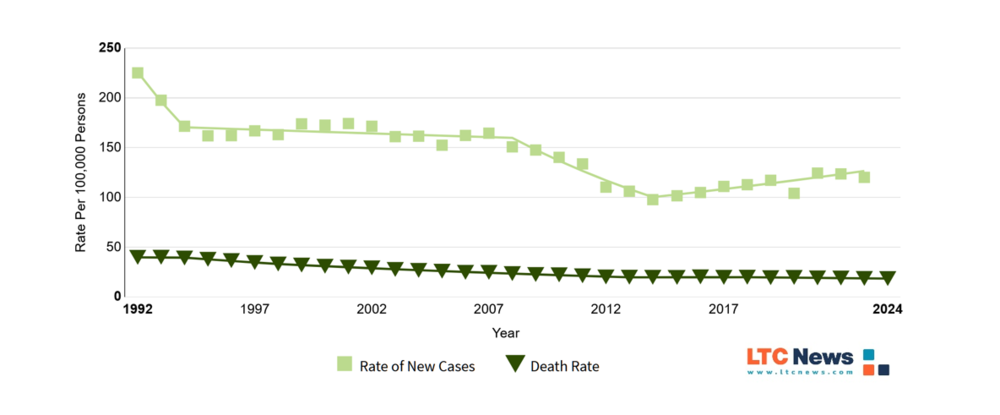
Still, statistics can feel distant until they touch your own family. Most men know someone—a coworker, a neighbor, a relative—who has faced prostate cancer. For many, the diagnosis comes as a shock, not because the symptoms were severe, but because they were subtle or ignored. Men often push through discomfort, delay appointments, or assume “it’s nothing.” That hesitation can cost precious time.
Prostate cancer is not just a medical issue; it’s a life issue. It affects the man who receives the diagnosis, but it also affects the people who love him. A partner suddenly becomes a caregiver. Adult children start worrying about their father’s future. Families rearrange schedules, priorities, and sometimes their entire lives.
That’s why awareness matters. That’s why screening matters. And that’s why talking about prostate cancer—openly, honestly, and without stigma—is one of the most powerful steps men can take to protect their health and their families.
Most Men Will Develop Prostate Cancer if They Live Long Enough
Prostate cancer begins in the prostate gland, a walnut‑sized organ located just below the bladder. It’s small, often overlooked, and easy to forget about—until something goes wrong. But the reality is that age is the single strongest risk factor for prostate cancer. The longer a man lives, the more likely it becomes that prostate cells will develop changes that lead to cancer. Family history, race, and lifestyle all play a role in prostate cancer risk, but Dr. Derek Lomas at the Mayo Clinic says one factor stands out above the rest.
Age is the biggest factor. It's going to increase with age. But family history matters a lot, too." — Dr. Derek Lomas, urologist, Mayo Clinic
Autopsy studies reveal a striking truth: by age 80, three‑quarters or more of men have some degree of prostate cancer, even if it was never diagnosed or caused symptoms during life. In other words, prostate cancer is not rare—it is almost a biological inevitability of aging.
That fact can be unsettling, but it’s also empowering. It means prostate cancer is not a personal failure, a lifestyle mistake, or something to be ashamed of. It’s part of the natural aging process, and understanding that helps men approach screening and prevention with clarity rather than fear.
For many men, this knowledge becomes a turning point. It reframes prostate cancer from something that happens to “other people” into something that deserves attention long before symptoms appear. It encourages men to take ownership of their health, to ask questions, and to stay engaged with their doctors as they move through their 50s, 60s, and beyond.
Symptoms Men Should Not Ignore
The CDC notes that some men have no symptoms, but common warning signs include:
-
Blood in the urine or semen
-
Difficulty starting urination
-
Weak or interrupted urine flow
-
Difficulty emptying the bladder
-
Frequent urination, especially at night
-
Pain or burning during urination
-
Painful ejaculation
-
Persistent pain in the back, hips, or pelvis
Any man experiencing these symptoms should contact a healthcare professional promptly.
Screening Recommendations
The U.S. Preventive Services Task Force advises men ages 55 to 69 to discuss PSA screening with their doctor to make an individualized decision. Screening typically includes a prostate‑specific antigen (PSA) blood test and may include a digital rectal exam. PSA screenings can identify prostate cancer before symptoms occur, when treatment that's both effective and mindful of quality of life can be considered.
Early detection is our most powerful tool." — Dr. Brian Chon, MD, Medical Director, ProCure Proton Therapy Center.
Men at higher risk—including Black men and those with a family history—may need to begin conversations earlier.
What a PSA Test and Digital Rectal Exam Actually Involve
When doctors talk about prostate cancer screening, they’re usually referring to two tools: the prostate‑specific antigen (PSA) blood test and, in some cases, a digital rectal exam (DRE). Each test provides different information, and together they help doctors understand whether the prostate is healthy or showing signs that need further evaluation.
Prostate‑Specific Antigen (PSA) Blood Test
A PSA test is a simple blood draw—nothing more complicated than routine lab work. The test measures the level of prostate‑specific antigen, a protein made by both normal and cancerous prostate cells.
Here’s what makes PSA useful:
-
Higher‑than‑expected PSA levels can be a sign of prostate cancer.
-
But elevated PSA can also come from non‑cancer causes, such as an enlarged prostate, infection, inflammation, or even recent sexual activity.
-
Doctors look at the trend over time, not just a single number. A rising PSA level can be more meaningful than one isolated result.
The PSA test doesn’t diagnose cancer by itself, but it’s often the first clue that something may need a closer look.
Digital Rectal Exam (DRE)
A digital rectal exam is a quick physical exam in which a clinician gently inserts a gloved, lubricated finger into the rectum to feel the prostate.
Why this matters:
-
The prostate sits directly in front of the rectum, making it one of the few internal organs that can be physically examined.
-
The clinician checks for lumps, hard areas, asymmetry, or irregularities that might suggest cancer.
-
The exam usually takes less than a minute.
While the DRE can feel awkward, it provides information that a PSA test alone cannot. Some prostate cancers don’t raise PSA levels significantly, but they can still be felt during a physical exam.
How the Two Tests Work Together
Think of PSA and DRE as complementary:
-
PSA looks for changes in the blood.
-
DRE looks for changes in the prostate’s structure.
When combined, they give doctors a more complete picture and help determine whether additional testing—such as imaging or a biopsy—might be needed.
Why Screening and Checkups Matter
Most medical experts agree that regular screening and preventive care are essential. A prostate cancer diagnosis affects not only the man but also his spouse or partner, who often becomes part of the care journey. Yet men historically underuse preventive care. A national survey found that more than half of men had not had a routine physical exam or cholesterol test. Regular checkups, lab work, and healthy lifestyle habits become increasingly important as men enter their 50s and beyond.
Aging also increases the likelihood of needing help with daily activities or supervision due to cognitive decline, including dementia.
One of the most important things men need to understand about prostate cancer is this: when it’s found early, it is one of the most treatable cancers in medicine. Localized prostate cancer, cancer that is still confined to the prostate, has an extremely high survival rate. Treatments such as surgery, radiation therapy, or even active surveillance can keep the cancer under control for years, often without major disruption to a man’s daily life.
But that reassuring reality only applies when the cancer is detected early.
Why Early Detection Matters
Early‑stage prostate cancer usually grows slowly. It often causes no symptoms at all, which is why screening tools like the PSA blood test and the digital rectal exam are so important. When cancer is caught at this stage:
-
It is typically small and contained, making treatment more effective.
-
Men have more treatment options, including less invasive approaches.
-
Side effects are often more manageable, and recovery is easier.
-
Many men can choose active surveillance, avoiding treatment altogether unless the cancer changes.
In other words, early detection gives men control — control over their health, their treatment choices, and their future.
What happens when prostate cancer is ignored
When prostate cancer is not detected early or is dismissed as “just getting older,” it can grow silently for years. Over time, the cancer can break out of the prostate and spread to nearby tissues, lymph nodes, or bones. Once that happens, the disease becomes much harder to treat and can create a cascade of health and aging‑related problems.
As prostate cancer advances, men may face:
-
Chronic pain, especially in the hips, back, or pelvis
-
Difficulty urinating, sometimes requiring catheters
-
Bone weakness or fractures if the cancer spreads to the skeleton
-
Fatigue and weight loss
-
Loss of independence, as mobility and daily functioning decline
-
More aggressive treatments, such as hormone therapy, chemotherapy, or targeted therapy
-
Higher risk of long‑term side effects, including incontinence and erectile dysfunction
These complications don’t just affect the man — they affect his partner, his family, and his ability to age with dignity and independence.
The Aging Connection: Why Delaying Hits Harder Later in Life
As men age, their bodies naturally become less resilient. Recovery takes longer. Other chronic conditions — heart disease, diabetes, arthritis — become more common. When prostate cancer is ignored until later in life, it collides with these age‑related changes, making treatment more complicated and the impact more severe.
Advanced prostate cancer can accelerate the loss of independence that many older adults fear most. It can force families into caregiving roles they never expected. It can drain retirement savings meant to support a comfortable life, not medical crises.
Prostate cancer is one of the few cancers where men have a real opportunity to stay ahead of the disease. Early detection keeps treatment simple, outcomes strong, and quality of life high. Ignoring symptoms or skipping screening doesn’t just increase cancer risk — it increases the risk of losing independence, mobility, and the ability to age on your own terms.
This is why awareness matters. This is why screening matters. And this is why talking openly about prostate health is one of the most powerful steps men can take to protect themselves and the people who love them.
How Current or Past Prostate Cancer Affects Your Ability to Obtain Long‑Term Care Insurance
A history of prostate cancer doesn’t automatically prevent someone from getting Long‑Term Care Insurance, but it does change how insurance companies evaluate risk. Ever insurance company has long-term care underwriting rules they follow and that can vary depending on the company. Carriers look closely at cancer history because it can influence long‑term health, future care needs, and the likelihood of complications as a person ages.
If You Currently Have Prostate Cancer
Men who are undergoing treatment, have active disease, or have recently completed treatment are generally not eligible for Long‑Term Care Insurance. Insurers want to see that the cancer is fully treated, stable, and not showing signs of recurrence before they will consider an application.
This waiting period varies by carrier, but most require:
-
Completion of treatment
-
A period of stability (often 6–24 months)
-
Favorable follow‑up PSA levels
-
No evidence of metastasis
If the cancer is advanced, aggressive, or has spread beyond the prostate, traditional LTC Insurance is typically not available.
If You Had Prostate Cancer in the Past
Many men with a history of prostate cancer can still qualify, especially if:
-
The cancer was low‑grade
-
It was caught early
-
Treatment was successful
-
PSA levels remain stable
-
There has been no recurrence
Carriers often look at:
-
Gleason score
-
Stage at diagnosis
-
Type of treatment (surgery, radiation, active surveillance)
-
Time since treatment
-
Current PSA trends
For example, a man treated years ago for a small, localized tumor with a Gleason score of 6 may still qualify for preferred or standard rates. Someone with a higher Gleason score or more aggressive disease may face higher premiums or limited benefit options, but coverage can still be possible. Since every insurance company will look at prostate cancer differently, seeking help form an experienced Long-Term Care Insurance specialist representing all the major companies offering long-term care solutions is essential.
Why Insurers Care: The Aging Connection
Prostate cancer itself is only part of the picture. Insurers also consider how cancer—and its treatment—can affect long‑term health as a man ages.
Past or current prostate cancer can increase the risk of:
-
Urinary complications
-
Mobility limitations
-
Chronic pain
-
Hormone‑related side effects
-
Fatigue or weakness
-
Secondary health issues from treatment
These conditions can raise the likelihood of needing help with daily activities later in life—exactly what Long‑Term Care Insurance is designed to cover. That’s why insurers evaluate cancer history so carefully.
Why Planning Early Matters
The best time to secure Long‑Term Care Insurance is before health issues appear. Most people obtain coverage in their 50s, when they are still healthy enough to qualify and premiums are more affordable.
For men with a history of prostate cancer, applying earlier—after treatment is complete and PSA levels are stable—can make the difference between:
-
Being approved, or
-
Being declined
And for men who have not yet faced prostate cancer, early planning ensures that if cancer ever does appear—as it does for so many men later in life—they already have coverage in place.
👉Learn More: Long-Term Care Insurance Learning Center
Prostate cancer doesn’t automatically close the door on Long‑Term Care Insurance. Many men with a past diagnosis still qualify, and those who plan early have the greatest number of options. What matters most is stability, early detection, and taking action before age and health issues limit choices.
Frequently Asked Questions About Prostate Cancer, Screening, and Long-Term Care Planning
What is prostate cancer?
Prostate cancer develops in the prostate gland, a small organ located below the bladder in men. It is the most commonly diagnosed cancer in American men after skin cancer and remains the second-leading cause of cancer-related death among men in the United States.
How common is prostate cancer?
Prostate cancer becomes increasingly common with age. Research shows that by age 80, most men will have some degree of prostate cancer cells present, even if they never experience symptoms or receive a diagnosis.
Is prostate cancer usually treatable?
Yes. When detected early and before it spreads beyond the prostate, prostate cancer is one of the most treatable cancers. The five-year relative survival rate is more than 98 percent.
What symptoms should men never ignore?
Men should contact a healthcare provider if they experience:
- Blood in urine or semen
- Difficulty starting urination
- Weak or interrupted urine flow
- Frequent urination, especially at night
- Pain or burning during urination
- Painful ejaculation
- Persistent pain in the back, hips, or pelvis
- Difficulty fully emptying the bladder
Some men experience no symptoms at all, which is why screening is important.
What is a PSA test?
A prostate-specific antigen (PSA) test is a simple blood test that measures the level of PSA, a protein produced by the prostate. Elevated PSA levels can be associated with prostate cancer, but they may also result from non-cancerous conditions such as an enlarged prostate or inflammation.
What happens during a digital rectal exam (DRE)?
During a DRE, a healthcare professional gently inserts a gloved, lubricated finger into the rectum to feel the prostate for lumps, hard areas, or other abnormalities. The exam typically takes less than a minute.
At what age should men discuss prostate cancer screening?
The U.S. Preventive Services Task Force recommends that men ages 55 to 69 discuss PSA screening with their healthcare provider and make an individualized decision based on personal risk factors and preferences. Men with higher risk factors may need to start those conversations earlier.
Who is at higher risk for prostate cancer?
Risk increases with age. Additional risk factors include:
- Family history of prostate cancer
- Being Black or African American
- Certain inherited genetic factors
Men with these risk factors should discuss screening earlier with their healthcare provider.
Why is early detection so important?
Early-stage prostate cancer often causes no symptoms. When detected before it spreads, men generally have more treatment options, fewer complications, and better long-term outcomes. Early detection can help preserve independence and quality of life as men age.
What can happen if prostate cancer is ignored?
Untreated prostate cancer can spread beyond the prostate to lymph nodes, bones, and other tissues. Advanced disease may lead to chronic pain, fractures, urinary complications, fatigue, loss of independence, and the need for more aggressive treatments.
Does prostate cancer affect spouses and family members?
Yes. A diagnosis often impacts an entire family. Spouses frequently become caregivers, adult children become involved in care decisions, and family routines, finances, and future plans may change significantly.
Can someone with a history of prostate cancer still qualify for Long-Term Care Insurance?
Often, yes. Many men with successfully treated, low-grade prostate cancer can still qualify for Long-Term Care Insurance, particularly if treatment was completed, PSA levels remain stable, and there has been no recurrence.
Can you obtain Long-Term Care Insurance while actively being treated for prostate cancer?
Generally, no. Most insurance companies require treatment to be completed and a period of stability before considering an application. Requirements vary by insurer.
What factors do Long-Term Care Insurance companies consider after a prostate cancer diagnosis?
Insurers typically review:
- Gleason score
- Cancer stage
- Type of treatment received
- Time since treatment
- Current PSA levels and trends
- Evidence of recurrence or metastasis
These factors help determine eligibility and pricing.


Sponsored