The Best Exercises for Older Adults: Building Strength, Balance, Brain Health, and Independence

About This Article
The right mix of exercise can help you or older family members stay active, reduce fall risk, support brain health, and potentially delay the need for long-term care. Strength training, balance exercises, aerobic activity, mobility work, and recovery practices all help you maintain independence as you age.

Marcus Howard
Marcus Howard writes about alternative health topics for older adults such as CBD, acupuncture, and herbal medicine.
Table of Contents
- Why Exercise Matters More as You Age
- Strength Training: Preserving Muscle and Independence
- Balance Training: Reducing Fall Risk
- Aerobic Activity: Supporting Heart Health and Endurance
- Exercise and Brain Health
- Mobility and Flexibility
- Posture and Core Stability
- Low-Impact Cardio for Joint Health
- Recovery Matters Too
- Recommended Apps and Digital Resources for Older Adults
- Movement Remains Important Even After Care Begins
- Exercise Is Only One Part of Aging Well
- Maintaining Independence Requires Both Action and Planning
You already know staying active is important. Staying active remains important as you age. What you may not realize is that different types of exercise protect different parts of your health as you get older.
A daily walk is excellent, but walking alone may not be enough to maintain strength, preserve balance, support brain health, and help you remain independent. As the years pass, your body naturally loses muscle mass, reaction time, flexibility, and stability. The good news is that many of these changes can be slowed—and sometimes significantly—through the right mix of physical activity.
While exercise cannot stop aging, it can help you stay healthier, more mobile, and more self-sufficient for longer. That matters not only for your quality of life but also because maintaining physical function may delay the need for long-term care services later in life.
Why Exercise Matters More as You Age
Aging affects multiple systems throughout the body. Muscle mass declines, bones become more fragile, joints lose flexibility, balance changes, and cardiovascular fitness often decreases. Exercise works because different forms of movement target different systems.
Most people do not exercise because they want stronger calf muscles or improved posture scores. They exercise because they want to continue doing the things they enjoy. You may want to travel, play golf, garden, volunteer, attend church, spend time with grandchildren, or simply continue living independently in your own home. Exercise helps support those goals.
There are several effective exercises designed to boost your strength and flexibility. Enhance your wellness today. MadMuscles is one of several resources offering a detailed, plain-language guide to the best exercises for seniors.
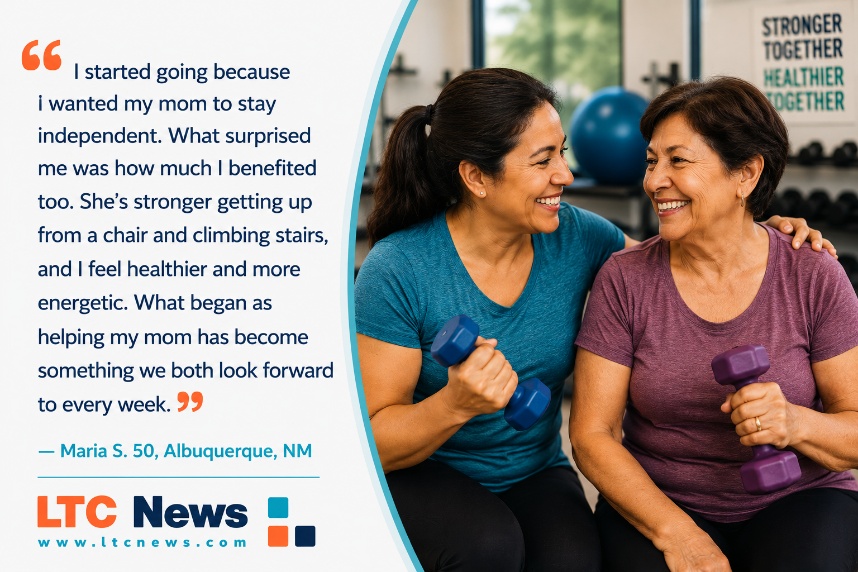
Share your thoughts and experiences about aging, caregiving, health, retirement, and long-term care with LTC News —Contact LTC News.
Strength Training: Preserving Muscle and Independence
One of the most significant changes associated with aging is sarcopenia, the gradual loss of muscle mass and strength.
Experts say that resistance exercise is one of the most effective interventions we have to combat age-related muscle loss and preserve functional independence as we age.
"Age-related muscle loss has been associated with a myriad of other health problems. Muscle mass is closely tied to our metabolism, and losing it increases the risk of developing metabolic diseases like type 2 diabetes and cardiovascular disease." — Roger A. Fielding, Ph.D., Senior Scientist in the Metabolism & Basic Biology of Aging directive at the HNRCA at Tufts University and Professor of Nutrition, Professor of Medicine, and Associate Director of the Boston Claude D. Pepper Older Americans Independence Center.
Fielding says that even if you or a loved one is overweight or obese, starting a physical activity program can have beneficial effects above and beyond weight control or weight loss.
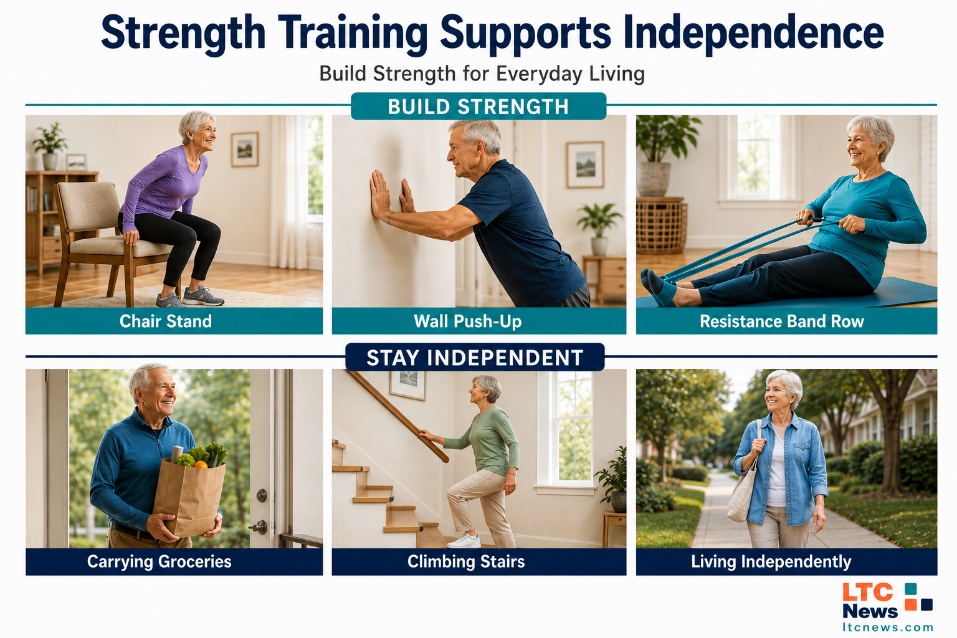
Strength training helps preserve the physical abilities that support independent living. Getting out of a chair, climbing stairs, carrying groceries, and recovering from illness all depend on maintaining adequate muscle strength.
Examples include:
- Chair stands
- Wall push-ups
- Resistance band exercises
- Seated rows
- Light dumbbell exercises
- Calf raises
Most older adults benefit from strength training at least twice a week.
Balance Training: Reducing Fall Risk
Falls remain one of the leading causes of injury among older adults. According to the CDC, one in four Americans age 65 and older experiences a fall each year. Falls remain one of the leading causes of emergency room visits, hospitalizations, and the need for long-term care for seniors.
The CDC's STEADI initiative emphasizes that falls are not inevitable as we age and that targeted interventions — including strength, balance, and mobility training — can meaningfully reduce fall risk.
Many older adults gradually reduce activities because they fear falling. Ironically, becoming less active often increases fall risk. Improving balance can restore confidence and encourage greater participation in daily life. Confidence is key.
Professor Kim Delbaere, Senior Principal Research Scientist at Neuroscience Research Australia and Director of Innovation and Translation at the Falls, Balance and Injury Research Center, says older adults with great concerns about falling were significantly more likely to experience a fall.
"Concerns about falling are highly prevalent in older adults, affecting nearly one in two people by age 86." — Professor Kim Delbaere.
Improving your or a loved one's balance will also improve confidence.
Helpful balance exercises include:
- Standing on one foot
- Heel-to-toe walking
- Tai chi
- Sit-to-stand exercises
- Weight-shifting exercises
Even five to ten minutes a day can make a difference.
Aerobic Activity: Supporting Heart Health and Endurance
Aerobic exercise strengthens the heart and lungs while improving endurance and circulation. Regular aerobic activity has been associated with lower rates of heart disease, type 2 diabetes, depression, and disability.
Walking remains one of the most accessible forms of aerobic activity, but it is not the only option.
Other examples include:
- Swimming
- Cycling
- Dancing
- Water aerobics
- Rowing
- Low-impact fitness classes
Aerobic exercise supports far more than cardiovascular health. It helps maintain energy, endurance, and the stamina needed for everyday activities.
Exercise and Brain Health
Many people think about exercise primarily in terms of weight management or heart health. Increasingly, researchers are examining its role in supporting cognitive function. Research published in the British Journal of Sports Medicine, including a 2022 meta-analysis of 58 studies, found that physical activity is associated with a reduced risk of dementia, with higher fitness levels linked to progressively lower risk.
Exercise improves blood flow, supports cardiovascular health, and may help reduce some of the risk factors associated with cognitive decline. Exercise is not a cure for dementia, nor can it guarantee prevention. However, physicians frequently recommend physical activity as part of a comprehensive strategy for healthy brain aging.
A decline in memory is a big concern for many people as they age. According to the Alzheimer's Association, 7.4 million Americans age 65 and older are living with Alzheimer's disease, and approximately 74 percent are age 75 or older.
Mobility and Flexibility
Mobility and flexibility exercises help maintain comfortable movement and range of motion. Without regular movement, stiffness can make routine activities more difficult and increase the risk of falls.
Helpful exercises include:
- Gentle stretching
- Chair yoga
- Shoulder rolls
- Hip mobility exercises
- Ankle circles
- Neck stretches
Many experts recommend performing mobility exercises daily, even for just a few minutes.
Posture and Core Stability
Posture affects more than appearance. Core strength and proper alignment influence balance, mobility, breathing, and comfort. Exercises that strengthen the muscles supporting the spine and pelvis can help reduce back pain and improve confidence while walking and standing.
Examples include:
- Wall stands
- Chin tucks
- Shoulder blade squeezes
- Seated rotations
- Gentle core exercises
A strong core provides the foundation for many everyday movements.
Low-Impact Cardio for Joint Health
Many older adults live with arthritis, chronic pain, or previous injuries. Low-impact activities provide cardiovascular benefits while reducing stress on the joints.
Popular options include:
- Walking
- Swimming
- Water aerobics
- Recumbent cycling
- Elliptical machines
Water-based exercise is particularly effective because the water supports body weight while providing resistance.
Recovery Matters Too
Healthy aging is not just about exercise. Recovery is equally important. Recovery practices include:
- Stretching
- Breathing exercises
- Meditation
- Restorative yoga
- Tai chi
- Adequate sleep
These activities support stress management, recovery, flexibility, and overall well-being.
Recommended Apps and Digital Resources for Older Adults
Staying consistent is easier when you have the right tools. These apps are designed — or well-suited — for older adults focused on strength, balance, and healthy aging.
MadMuscles: A personalized fitness app that builds routines around your starting fitness level, available equipment, and goals, then adjusts as you progress. Its intake assessment is better suited to more active older adults who want structured strength routines. Seniors focused on fall prevention or with significant mobility limitations may prefer one of the senior-specific options below.
SilverSneakers GO: The digital extension of the SilverSneakers program. The app features more than 200 workout videos and live online classes covering strength, flexibility, balance, and mobility, along with a location finder for in-person classes near you.
Many Medicare Advantage and Medicare Supplement plans include SilverSneakers membership, allowing eligible members to access content at no additional cost.
FitOn: A free app with a dedicated Senior Fit category. Workouts in that section are specifically designed for older adults, focusing on improving mobility, strength, balance, and flexibility while being gentle on the joints. FitOn is also available at no cost through select Medicare plans — check with your benefits administrator.
Sworkit: Sworkit has helped more than 100,000 members over age 65 move more consistently and safely, with programs covering strength, cardio, yoga, and stretching. The app offers more than 900 exercises and 400 workouts, including low-impact routines suited for older adults, with customizable duration and fitness level settings.
MapMyWalk: A straightforward walking tracker that logs steps, distance, pace, and route. Walking remains one of the most accessible and effective forms of aerobic exercise for older adults, and MapMyWalk helps build accountability and consistency — no gym required. Free on iOS and Android.
A note on app selection: The best app is the one you will actually use. If you have significant mobility limitations, arthritis, or a history of falls, talk with your physician or physical therapist before starting any new exercise program — they can help you identify the safest starting point.
Movement Remains Important Even After Care Begins
Exercise does not stop being important once someone begins receiving care. Home care agencies, assisted living communities, memory care centers, rehabilitation providers, and nursing homes routinely incorporate movement programs into care plans.
Maintaining strength and mobility can help preserve functional abilities, improve mood, reduce fall risk, and support overall quality of life.
Common activities include walking programs, chair exercise classes, physical therapy, stretching routines, balance training, and water-based exercise programs.
👉 Find quality caregivers and longterm care facilities with the LTC News Caregiver Directory—the largest database of caregivers and facilities in the United States. This free directory allows you to search by zip code or city and helps you narrow down long-term care options for a loved one.
If you manage a home health agency or long-term care facility, you can claim your free listing in the LTC News Caregiver Directory and/or upgrade the listing to enhance visibility and highlight your staff and services through the LTC News Directory Business Portal.
For people living with dementia, structured physical activity may also help reduce anxiety, improve sleep quality, and maintain function longer. The goal is not athletic achievement. The goal is to preserve independence, dignity, and quality of life.
Exercise Is Only One Part of Aging Well
Maintaining your health is one of the smartest investments you can make. However, healthy habits cannot eliminate every risk associated with aging. Even active adults may eventually require assistance due to dementia, stroke, Parkinson's disease, cancer, severe arthritis, injury, or simple longevity.
Medicare pays only for limited short-term skilled care following a qualifying illness or injury. It does not cover most ongoing long-term care services. Medicaid generally provides coverage only for those who meet strict income and asset requirements.
👉Does Health Insurance, Medicare, or Medicaid Pay for Long-Term Care?
As a result, many families include Long-Term Care Insurance as part of their retirement planning strategy. A policy can help pay for care at home, adult day care, assisted living, memory care, or nursing home care while helping protect retirement assets and reducing stress on loved ones.
Most people who purchase Long-Term Care Insurance do so between ages 47 and 67 while they are still healthy enough to qualify for coverage and secure favorable premiums. To learn more about Long-Term Care Insurance, caregiving, aging, retirement planning, and long-term care costs, visit the LTC News LTC Insurance Learning Center.
Maintaining Independence Requires Both Action and Planning
Exercise remains one of the most powerful tools available to support healthy aging. It can help preserve strength, mobility, confidence, and independence while reducing the risk of falls and disability.
Yet healthy aging is about more than fitness alone. Even people who exercise regularly can eventually require care due to illness, injury, cognitive decline, or advanced age. That is why the most successful retirement plans address both sides of aging: staying as healthy as possible and preparing for the possibility that care may someday be needed.
Frequently Asked Questions
Can exercise help support brain health?
Research suggests regular physical activity is associated with better cognitive function and a lower risk of dementia. Exercise improves blood flow, supports cardiovascular health, and may help protect brain health as part of an overall healthy lifestyle.
What type of exercise is most important for older adults?
No single exercise is most important. Experts recommend a combination of strength training, balance exercises, aerobic activity, flexibility work, and recovery practices. Together, these activities support overall physical function and healthy aging.
Does walking provide enough exercise?
Walking is an excellent foundation for fitness and healthy aging. However, walking alone does not adequately address muscle strength, balance, flexibility, or posture. Most experts recommend combining walking with strength and balance exercises.
Can exercise really help me stay independent as I age?
Yes. Regular exercise helps maintain muscle strength, balance, mobility, and endurance, all of which are essential for performing daily activities independently. Staying active may also help delay frailty and reduce the risk of falls and disability.
What are the best exercises for someone with arthritis?
Low-impact activities are often ideal for people with arthritis. Walking, swimming, water aerobics, tai chi, chair exercises, and gentle stretching can improve mobility while minimizing stress on the joints.
Does exercise eliminate the need for long-term care?
No. Exercise can improve health and help preserve independence, but it cannot eliminate the possibility of needing care due to illness, injury, cognitive decline, or advanced age. Planning for future care needs remains important.
Can exercise reduce the risk of falls?
Yes. Balance and strength training can significantly reduce fall risk. Exercises such as tai chi, chair stands, heel-to-toe walking, and single-leg balance exercises help improve stability and confidence.
How much exercise should older adults get each week?
The Centers for Disease Control and Prevention recommends at least 150 minutes of moderate-intensity aerobic activity each week, along with muscle-strengthening activities at least twice weekly. Balance exercises are also recommended for older adults at risk of falling.
How do home care providers and long-term care facilities use exercise?
Home care agencies, assisted living communities, memory care centers, rehabilitation providers, and nursing homes routinely include exercise and movement programs in care plans. These programs help maintain strength, mobility, balance, and quality of life.
Is it safe to start exercising after age 70?
For most people, yes. Many older adults begin exercise programs successfully in their 70s, 80s, and beyond. Start slowly and consult a physician before beginning a new exercise routine, especially if you have chronic medical conditions or mobility limitations.
Can exercise help someone living with dementia?
Exercise cannot cure dementia, but research suggests regular physical activity may help improve mood, reduce anxiety, enhance sleep quality, and support functional abilities. Many memory care programs include structured movement activities as part of daily care.

Sponsored