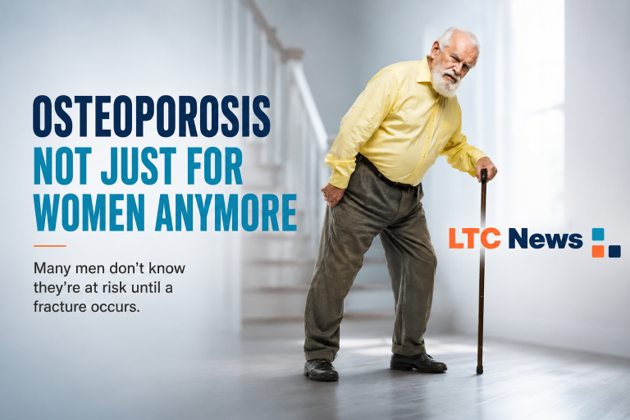
Osteoporosis – Not Just for Women Anymore
About This Article
Do you know a man with Osteoporosis? It happens and if not treated in time it can lead to fractures, surgery, long-term care, and death. Osteoporosis is an issue for both men and women.

Linda Maxwell
Linda Maxwell is a journalist who writes about aging, health, chronic illness, caregiving, and long-term care issues impacting older adults and their families.
Table of Contents
- Osteoporosis in Men Attacks Silently
- Risk Factors Men Need to Know
- Medications That Increase Risk
- Osteoporosis Treatment in Men Is Often Successful
- Osteoporosis and the Long-Term Care Connection
- Osteoporosis Is Not Just a Women's Issue — And the Stakes Are High
- Frequently Asked Questions About Osteoporosis in Men
Most people know osteoporosis is a significant health concern for women. One in three women age 50 and older are at risk of an osteoporotic fracture. But many people are unaware that men can be equally impacted by bone density loss — and face serious, even life-threatening consequences.
The Bone Health and Osteoporosis Foundation reports that up to one in four men over age 50 will break a bone due to osteoporosis. Consider these facts:
- Approximately two million American men already have osteoporosis. About 12 million more are at risk.
- Men older than 50 are more likely to break a bone due to osteoporosis than they are to get prostate cancer.
- Each year, about 80,000 men will break a hip.
- Men are more likely than women to die within a year after breaking a hip, typically due to complications.
- Men can break bones in the spine or break a hip, but this often happens later in life than it does for women.
Osteoporosis in Men Attacks Silently
One of the biggest challenges with osteoporosis is that it offers no warning signs. There is no pain, no visible symptoms, and no obvious signal that your bones are becoming dangerously fragile. You may feel completely healthy right up until the moment you break a bone — and that fracture may be the first indication you have the disease at all.
This is why osteoporosis is often called a "silent disease." Bone loss happens gradually, over years and even decades, without any outward sign that anything is wrong. By the time a fracture occurs, significant damage has already been done.
For women, bone density screening has become a more routine part of preventive care. Many women begin discussing bone health with their doctor in their early to mid-50s, particularly around menopause, when estrogen loss accelerates bone loss significantly. But men rarely have that same conversation.
The reasons are partly cultural and partly medical. Osteoporosis has long been perceived as a women's health issue, which means it is often overlooked in men — by patients and doctors alike. Many men simply assume they are not at risk. Their doctors may not raise the subject. And without symptoms to prompt concern, bone density testing often never happens.
That silence can be deadly. Men who fracture a hip face sobering odds. According to the Bone Health and Osteoporosis Foundation, men are more likely than women to die within a year of breaking a hip, typically due to complications from the injury. A fracture that might have been prevented with early screening and treatment instead becomes a life-altering or life-ending event.
Family history plays a role in a man's osteoporosis risk, but it is far from the only factor. Chronic diseases, certain medications, hormone levels, lifestyle habits, and age all contribute. The problem is that without screening, most men have no idea where they stand.
A fracture after age 50 is an important signal that should never be dismissed or attributed simply to bad luck or an awkward fall. It is often the first visible sign of a disease that has been silently progressing for years.
Talking with your doctor about bone health — including whether a bone density test is appropriate for you — is one of the most important conversations a man over 50 can have. It takes minutes. The consequences of not having it can last a lifetime.
Risk Factors Men Need to Know
The National Institute of Arthritis and Musculoskeletal and Skin Diseases (NIAMS) identifies the following risk factors for osteoporosis in men:
- Chronic diseases, such as diabetes or rheumatoid arthritis
- Regular use of certain medications, such as glucocorticoids
- Parkinson's disease and other conditions that affect neurological function
- Low levels of the sex hormones testosterone and estrogen
- Unhealthy habits, such as smoking and drinking too much alcohol
- Weak muscles
- Being age 70 or older
Men who suffer from chronic diseases affecting the kidneys, lungs, or intestines face elevated risk, as do men with health conditions that alter hormone levels. The leading causes of Osteoporosis in men:
- Glucocorticoid medications.
- Other immunosuppressive drugs.
- Hypogonadism (low testosterone levels).
- Excessive alcohol consumption.
- Smoking.
- Chronic obstructive pulmonary disease and asthma.
- Cystic fibrosis.
- Gastrointestinal disease.
- Hypercalciuria.
- Anticonvulsant medications.
- Thyrotoxicosis.
- Hyperparathyroidism.
- Immobilization.
- Osteogenesis imperfecta.
- Homocystinuria.
- Neoplastic disease.
- Ankylosing spondylitis and rheumatoid arthritis.
- Systemic mastocytosis.
Medications That Increase Risk
Men treated for asthma, allergies, or inflammatory conditions are often prescribed steroids and other glucocorticoids, which can accelerate bone loss over time. Common glucocorticoid drugs include beclomethasone, betamethasone, budesonide, cortisone, dexamethasone, hydrocortisone, methylprednisolone, prednisolone, prednisone, and triamcinolone.
Low testosterone is another significant risk factor. And lifestyle habits — smoking and excessive alcohol use — will also erode bone density over time. Add in the simple reality of aging, and the risk compounds.
Several medications can be programmatic. Men who suffer from asthma and allergies, for example, have often been treated with steroids and other glucocorticoids. Examples of glucocorticoid drugs include:
- beclomethasone
- betamethasone
- budesonide
- cortisone
- dexamethasone
- hydrocortisone
- methylprednisolone
- prednisolone
- prednisone
- triamcinolone
Osteoporosis Treatment in Men Is Often Successful
The good news is that osteoporosis is treatable — but you have to know you have it. Men should discuss bone density screening and their personal risk factors with their doctor as they get older. Don't wait for a fracture to start the conversation.
Beyond calcium and weight-bearing exercise, several medications can meaningfully improve bone density. According to the International Osteoporosis Foundation, these treatments have reduced the risk of hip fracture by up to 40 percent, vertebral fractures by 30 to 70 percent, and non-vertebral fractures by 15 to 20 percent.
Osteoporosis and the Long-Term Care Connection
Men and women alike can require long-term care as a result of osteoporosis. A hip fracture doesn't just mean surgery — it often means weeks or months of rehabilitation, home care, or even a nursing facility stay.
Standard health insurance and Medicare cover only limited skilled care, such as short-term rehabilitation following surgery. The bulk of extended care costs fall out-of-pocket unless you plan ahead.
Long-Term Care Insurance is an effective, affordable way to protect your savings and reduce the financial and emotional burden on your family. Experts recommend securing coverage in your 40s or 50s, before health conditions limit or prevent your ability to qualify.
Osteoporosis Is Not Just a Women's Issue — And the Stakes Are High
For too long, osteoporosis has been dismissed as something only women need to worry about. It is not. Men develop the disease, men suffer fractures because of it, and men die from its complications. The numbers make that undeniably clear. What makes osteoporosis especially dangerous for men is the combination of silence and assumption. The disease progresses without symptoms. Men assume they are not at risk. Doctors often don't raise the subject. And by the time a fracture happens, the window for early intervention has already closed.
A broken hip, a fractured vertebra, a fall that should have been minor — these are not just medical events. They are often the beginning of a long and expensive care journey. Recovery from an osteoporosis-related fracture frequently requires skilled rehabilitation, home health care, assisted living, or even a nursing facility stay. That care can last weeks, months, or in some cases, permanently.
Here is what too many men and their families discover too late: health insurance and Medicare will not cover most of that care. A short stay in a rehabilitation facility may be partially covered, but extended care costs fall squarely on you and your family — unless you planned ahead.
Long-Term Care Insurance exists precisely for moments like these. A policy helps cover the cost of home care, assisted living, memory care, and nursing facility services — protecting the savings you spent a lifetime building and sparing your family from shouldering an enormous financial and emotional burden.
The best time to plan is before you need to. Most people qualify for coverage in their 40s or 50s, when premiums are lower and health conditions are less likely to stand in the way. Waiting until a diagnosis arrives — whether osteoporosis, heart disease, or any other chronic condition — often means waiting too long.
Osteoporosis does not discriminate by gender. Neither does the need for long-term care. The men who fare best are the ones who took both seriously before a fracture forced the conversation. Planning now for the futrue costs and burdens of aging should be a big part of your retirement plan.
👉 Learn More Now: LTC News Long-Term Care Insurance Learning Center
Frequently Asked Questions About Osteoporosis in Men
Can men really get osteoporosis?
Yes. Osteoporosis is often associated with women, but it affects millions of men. According to the Bone Health and Osteoporosis Foundation, up to one in four men over age 50 will experience an osteoporosis-related fracture during their lifetime.
What are the warning signs of osteoporosis in men?
Unfortunately, there are usually no warning signs. Osteoporosis is known as a "silent disease" because bone loss occurs gradually without pain or symptoms. For many men, a broken bone is the first indication that osteoporosis is present.
At what age should men start thinking about bone health?
Men should begin discussing bone health with their physician as they age, especially after age 50. Those with risk factors such as low testosterone, chronic disease, smoking, heavy alcohol use, or long-term steroid use may need earlier evaluation.
Why are hip fractures so dangerous for men?
Hip fractures can lead to surgery, prolonged rehabilitation, loss of independence, and serious medical complications. Men are more likely than women to die within a year after a hip fracture, often because of complications related to the injury and recovery process.
What increases a man's risk of osteoporosis?
Several factors can increase risk, including:
- Age, especially after 70
- Low testosterone levels
- Smoking
- Excessive alcohol use
- Diabetes and other chronic diseases
- Rheumatoid arthritis
- Long-term use of glucocorticoid medications such as prednisone
- Parkinson's disease and other neurological disorders
- Limited physical activity or prolonged immobilization
Can medications cause bone loss?
Yes. Long-term use of glucocorticoid medications—including prednisone, dexamethasone, methylprednisolone, and similar drugs—can significantly accelerate bone loss and increase fracture risk.
How is osteoporosis diagnosed?
A bone density test, often called a DEXA scan, is the most common way to measure bone strength and identify osteoporosis before a fracture occurs. The test is quick, painless, and can help determine whether treatment is needed.
Is osteoporosis treatable in men?
Yes. Osteoporosis treatment can be highly effective when diagnosed early. Treatment may include prescription medications, calcium and vitamin D, weight-bearing exercise, lifestyle changes, and management of underlying medical conditions.
Can exercise help prevent osteoporosis?
Absolutely. Weight-bearing and resistance exercises help maintain and build bone strength. Regular physical activity can also improve balance and muscle strength, reducing the risk of falls and fractures.
What should a man do after a fracture occurs?
Any fracture after age 50 should be considered a potential warning sign of osteoporosis. Men who experience a broken bone should discuss bone density testing and osteoporosis evaluation with their physician rather than assuming the injury was simply due to an accident.
What is the connection between osteoporosis and long-term care?
A serious fracture can trigger the need for extended care services, including rehabilitation, home health care, assisted living, or nursing home care. Many people are surprised to learn that Medicare generally covers only short-term skilled care and does not pay for most ongoing long-term care needs.
Does Long-Term Care Insurance help if osteoporosis leads to extended care needs?
Yes. Qualified Long-Term Care Insurance can help pay for care at home, assisted living, memory care, or nursing facilities when a person meets benefit eligibility requirements. Having coverage can help protect retirement savings and reduce the burden placed on family caregivers.

Sponsored