Fall Prevention Tips Every Older Adult Should Know
About This Article
Falls are the leading cause of injury for adults 65 and older—but most are preventable. Learn practical, science-based ways to stay steady and independent at home, at church, in stores, and everywhere you go.

Linda Kople
Linda Kople is a freelance writer focused on caregiving, aging, health, wellness, long-term care, and retirement planning
Table of Contents
- Light Your Path—Day and Night
- Clear Clutter and Secure Trip Hazards
- Add Support Where Falls Happen Most
- Wear Shoes That Grip—Even Indoors
- Keep Floors Clean and Dry
- Build Strength and Balance (It’s Never Too Late)
- Schedule Regular Health and Medication Checks
- Stay Safe Beyond the Front Door
- If a Fall Leads to Care Needs, Know What’s Covered
- Your 10-Minute Fall-Proof Checklist
- Staying Ahead of the Risk
- Frequently Asked Questions About Falls and Fall Prevention for Older Adults
You might not think a quick stumble could change your life, but for older adults, one fall can mean months of recovery or permanent loss of mobility, and the need for long-term care.
According to the U.S. Centers for Disease Control and Prevention (CDC), about 14 million Americans 65 and older fall each year, and one in five of those falls leads to a serious injury such as a fracture or head trauma.
“The fastest-growing demographic in the U.S. is people over 85,” said Katie Drago, M.D., assistant professor of medicine (general internal medicine and geriatrics) in the Oregon Health & Science University School of Medicine.
It’s wonderful that people are living longer lives, but it also means that we’re seeing more cases of traumatic injury from ground-level falls.
Drago said that after a first fall, older adults are two to three times more likely to fall again.
We’re seeing more injuries from ground-level falls as people live longer. After the first fall, the risk of another increases two- to threefold.
Many people also lose confidence after a fall, becoming less active, which further weakens balance and strength. There are several types of slip and fall injuries, and they can often lead to hospitalizations and long-term care. The goal isn’t to live in fear, but to take small, smart steps to stay upright and independent.
Light Your Path—Day and Night
Dim lighting hides trip hazards. A single burned-out bulb can turn a safe hallway into a danger zone.
What to do:
- Use brighter bulbs (at least 60 watts LED) in hallways, stairwells, and bathrooms.
- Add nightlights or motion-sensor lights from your bedroom to the bathroom. They switch on automatically, so you’re never searching for a light switch in the dark.
- Place light switches at both the top and bottom of the stairs and near every doorway.
Good lighting also helps outside. Install a bright porch or garage light and replace bulbs right away. Many smart bulbs today connect to voice assistants, allowing you to turn lights on by command or with a smartphone, which is helpful if bending or reaching is difficult.
Clear Clutter and Secure Trip Hazards
Falls often start with something simple—a magazine pile, an electrical cord, or that throw rug that always curls up on one corner.
Take a slow walk through your home and notice every obstacle. Adult children should do this with their older loved ones to ensure safety.
Tips from the National Institute on Aging:
- Remove clutter from hallways and stairs.
- Replace throw rugs with non-slip mats or add rug grippers.
- Tape cords along baseboards so they’re out of walkways.
- Store frequently used items between waist and shoulder height—no climbing stools.
If you rely on a cane or walker, test your pathways to be sure they’re wide and clear. One afternoon of decluttering can drastically reduce your risk of falling.
Add Support Where Falls Happen Most
Bathrooms and staircases are the two most common fall zones. Wet tile, soapy surfaces, and steep steps combine to create hidden danger.
Simple upgrades can change everything:
- Grab bars: Install them near toilets and inside showers or tubs. Bars should be anchored to studs and rated to hold 250 pounds or more.
- Non-slip mats: Use in tubs and just outside the shower.
- Handrails: Mount sturdy rails on both sides of staircases—indoors and out.
- Raised toilet seats: Reduce strain on knees and hips.
A professional installer or handyman can secure these features correctly. Avoid suction-cup grab bars or towel racks; they can pull loose when you need them most.
Wear Shoes That Grip—Even Indoors
Bare feet or smooth socks might feel comfortable, but turn slick on polished floors. The right shoes add instant stability.
Choose footwear that provides:
- Firm, non-slip rubber soles (not foam or felt).
- Closed backs and low heels for ankle support.
- Proper fit—loose shoes can cause tripping, tight ones limit circulation.
If you prefer slippers at home, buy ones labeled “non-slip” or “grip.” Replace worn soles promptly; tread wears down faster than you realize. The CDC recommends wearing supportive shoes even inside if your flooring is hardwood or tile.
Keep Floors Clean and Dry
Spills, pet accidents, and wet shoes after rain can all turn your floor into a skating rink. Develop a quick-response habit: wipe it, dry it, and warn others.
Key habits:
- Clean spills immediately—use paper towels, not your socks.
- Keep absorbent, non-slip mats in kitchens, bathrooms, and entryways.
- When mopping, post a “wet floor” reminder, such as a towel or cone, until the floor is dry.
- On snowy or rainy days, leave shoes by the door and switch to indoor footwear.
These small changes eliminate the most common source of slips—water on smooth floors.
Build Strength and Balance (It’s Never Too Late)
Your muscles and reflexes are your first defense against falling. The stronger and steadier you are, the more likely you’ll catch yourself before you go down.
Start small:
- Walk daily, even if only around the house or block.
- Try chair exercises—leg lifts, toe taps, or sit-to-stand motions.
- Explore yoga or tai chi, both shown to improve balance and lower fall risk.
- Join a local SilverSneakers or senior-center fitness class for guidance and motivation.
Consistent exercise is the single best protection against falls.
Ask your doctor before starting new routines, especially if you have heart issues, arthritis, or neuropathy. Many hospitals and community centers offer free or low-cost fall-prevention programs.
Schedule Regular Health and Medication Checks
Falls aren’t only environmental. Sometimes the cause is internal—vision changes, dizziness from medication, or low blood pressure when standing up.
Add these checkups to your calendar:
- Medication review: Have your doctor or pharmacist review prescriptions at least once a year. Some blood-pressure, sleep, or anxiety drugs increase dizziness.
- Eye exam: Update your glasses; treat cataracts or glaucoma promptly.
- Foot exam: Foot pain or neuropathy can alter balance and gait.
Bringing all your medications, prescriptions, and over-the-counter medications to your next visit helps your clinician spot risky combinations.
Stay Safe Beyond the Front Door
Many serious falls happen away from home—in places you visit every week. Awareness and preparation go a long way.
Common trouble spots:
- Parking lots and sidewalks: Uneven pavement, curbs, ice, or puddles can catch you off guard. Walk slowly, wear sturdy shoes, and use railings or painted crosswalks when available.
- Grocery stores and malls: Freshly mopped or refrigerated areas can be slick. Use a shopping cart for balance. If the floor looks shiny, it’s probably wet.
- Medical offices and churches: Watch for door thresholds, cords under pews, and cluttered waiting rooms. Don’t hesitate to ask for an arm or assistance.
- Public transportation: Wait for buses or trains away from curbs and hold handrails firmly when boarding.
The Harvard Health Letter emphasizes that situational awareness —scanning for surface changes and lighting differences —can dramatically reduce fall risk.
If a Fall Leads to Care Needs, Know What’s Covered
A single fall can lead to temporary or long-term care needs—from home health visits to assisted-living stays. The problem is that if you or a loved one requires long-term care, that care is costly, and you will probably be responsible for paying for it. If the fall was due to third-party negligence, you can file a claim within the Oregon statute of limitations for personal injury.
Medicare may pay for up to 100 days in a skilled nursing facility when specific medical criteria are met and the individual was admitted to the hospital first, but it does not cover custodial long-term care, such as ongoing help with bathing or dressing.
Federal data show 56 percent of Americans who reach age 65 will eventually need long-term services and supports that meet the federal definition—help with two or more activities of daily living (ADLs) or cognitive impairment.
Planning before you get older with Long-Term Care Insurance can protect savings and reduce the burden on family members if you or a loved one requires ongoing extended care, whether due to a fall or another reason, including aging.
- Use the LTC News Cost of Care Calculator to see current and projected care costs by ZIP code.
- Find quality home-care agencies and facilities nationwide through the LTC News Caregiver Directory.
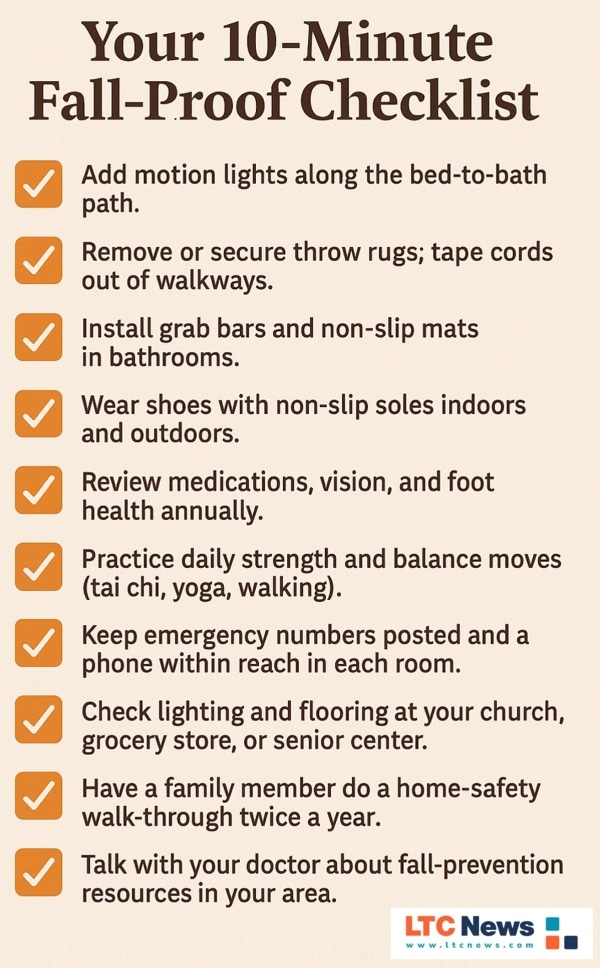
Your 10-Minute Fall-Proof Checklist
A few small changes in your or a loved one’s life can make a big difference in preventing falls. Use this quick checklist to keep your home and your life safer and more independent.
Staying Ahead of the Risk
Fall prevention isn’t about fear, it’s about freedom. You’ve worked hard for your independence; don’t let a preventable accident take it away.
- Ask yourself: What one small change can you make today to stay safer tomorrow?
If you’ve fallen within the past year, talk to your healthcare provider about local fall-prevention programs or physical therapy. The CDC’s STEADI initiative (Stopping Elderly Accidents, Deaths & Injuries) offers practical tools for older adults and caregivers.
Disclaimer: This article provides general safety and health information and is not a substitute for professional medical advice. Always consult your physician or physical therapist for recommendations based on your personal health, medications, and mobility.
Frequently Asked Questions About Falls and Fall Prevention for Older Adults
How common are falls among older adults?
Falls are more common than many people realize. About 14 million Americans age 65 and older fall each year, and one in five falls leads to a serious injury such as a fracture or head trauma.
Why are falls so dangerous as you age?
As you get older, your bones become more fragile, your balance may decline, and recovery takes longer. A single fall can lead to hospitalization, loss of mobility, or even the need for long-term care.
What happens after a first fall?
After your first fall, your risk of falling again increases two to three times. Many people also become less active due to fear, which weakens muscles and balance, increasing the risk even more.
What are the most common causes of falls at home?
Most falls happen due to simple, preventable issues, including:
- Poor lighting
- Clutter or loose rugs
- Wet or slippery floors
- Lack of grab bars or handrails
- Improper footwear
Addressing these hazards can significantly reduce your risk.
Which areas of the home are most dangerous?
Bathrooms and staircases are the most common fall zones due to:
- Wet, slippery surfaces
- Steep steps
- Lack of proper support
Installing grab bars, non-slip mats, and handrails can greatly improve safety.
Can exercise really help prevent falls?
Yes. Regular physical activity is one of the most effective ways to prevent falls. Exercises that improve strength and balance—like walking, chair exercises, yoga, or tai chi—can help you stay steady and reduce your risk.
Should you wear shoes inside the house?
If you have hardwood or tile floors, wearing supportive, non-slip shoes indoors is recommended. Bare feet or socks can increase the risk of slipping.
How do medications affect fall risk?
Some medications—especially those for blood pressure, sleep, or anxiety—can cause dizziness or balance issues. That’s why you should have your medications reviewed regularly by your doctor or pharmacist.
Do vision and foot health impact fall risk?
Absolutely. Poor vision can make it harder to see hazards, and foot pain or neuropathy can affect your balance and walking. Regular eye exams and foot care are essential for fall prevention.
Are falls only a concern at home?
No. Many falls happen outside the home in places like:
- Parking lots and sidewalks
- Grocery stores
- Medical offices
- Public transportation
Being aware of your surroundings and using support when needed can help reduce risk.
What does Medicare cover if you fall and need care?
Medicare may cover up to 100 days in a skilled nursing facility—but only if you meet strict medical requirements and have a qualifying hospital stay first.
It does not cover ongoing custodial care, such as help with bathing, dressing, or daily activities.
How likely is it that you will need long-term care?
Federal data show that about 56% of Americans age 65 and older will need long-term services and supports that meet the federal definition—help with two or more activities of daily living or cognitive impairment.
How can you plan ahead for the cost of care after a fall?
Planning ahead is critical. Options include:
- Reviewing care costs using the LTC News Cost of Care Calculator
- Exploring care providers through the LTC News Caregiver Directory
- Considering Long-Term Care Insurance to protect savings and reduce the burden on family
What is the easiest first step to reduce your fall risk today?
Start with one simple change:
- Improve lighting in your home
- Remove clutter or loose rugs
- Add a nightlight
- Wear proper footwear
Small steps can make a big difference in keeping you safe and independent.
What should you do if you’ve already fallen?
If you’ve fallen in the past year, talk to your healthcare provider. You may benefit from:
- A fall-risk assessment
- Physical therapy
- Local fall-prevention programs
Early action can help prevent future falls and protect your independence.

Sponsored