Don’t Be Fooled: Dementia Lookalikes Can Mimic Alzheimer’s — Here’s What You Need to Know

About This Article
Millions of Americans face Alzheimer’s and dementia, but reversible conditions can sometimes mimic these devastating diseases. Learn what to watch for and how planning with Long-Term Care Insurance can protect your family.

Linda Kople
Linda Kople is a freelance writer focused on caregiving, aging, health, wellness, long-term care, and retirement planning
Table of Contents
- Beyond Clinical Diagnosis of Alzheimer's
- Conditions That Can Mimic Dementia
- Don’t Overlook Hormonal or Mental Health Factors of Memory Loss
- Quest for Clarity: Seeking a Diagnosis and the Emotional Aftermath
- Long Road: Progression and the Caregiver’s Journey
- The Three-Fold Impact of Being a Caregiver
- Why Planning Still Matters
- Path Forward: Advocacy, Accuracy, and Action
- Resources for Families: Finding the Truth Behind Memory Loss
- Frequently Asked Questions -Dementia, Memory Loss, and Long-Term Care
You likely know someone living with dementia, but what if a loved one’s symptoms aren’t what they seem? Could their condition actually be reversible? Watching a family member struggle with memory loss is heartbreaking, often leaving caregivers feeling helpless as they navigate a changing reality. Many families must turn to professional care and often without Long-Term Care Insurance to pay for the care they need. However, understanding the nuances of a dementia diagnosis can offer a glimmer of hope—or at least a clearer path forward.
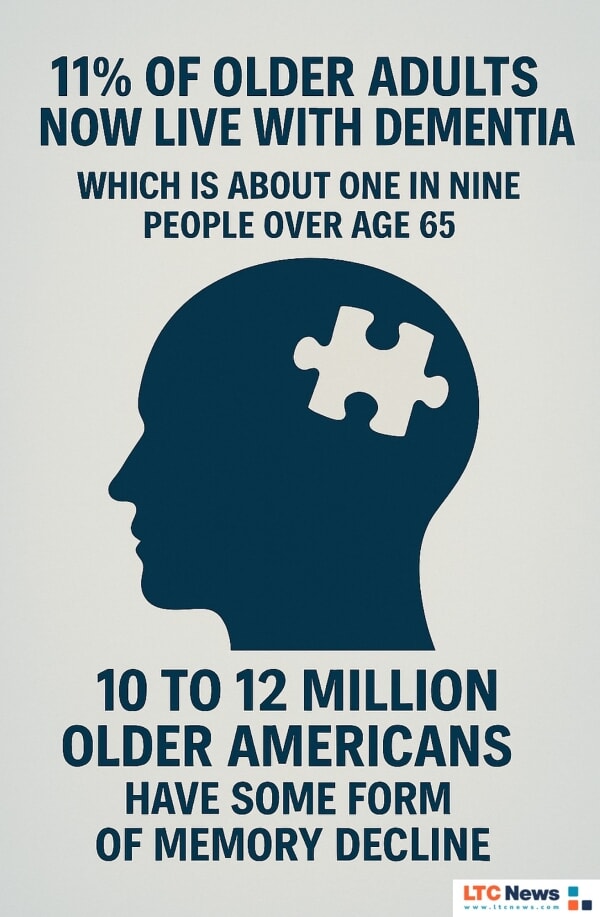
According to the 2025 Alzheimer’s Disease Facts and Figures report from the Alzheimer’s Association, the number of Americans aged 65 and older living with Alzheimer’s dementia has reached approximately 7.2 million—up from an estimated 6.9 million in 2024. Currently, about 11% of older adults—roughly one in nine people over age 65—live with the disease.
Beyond Clinical Diagnosis of Alzheimer's
While the statistics are staggering, they only tell part of the story. These figures focus on clinical dementia, the stage where the fog has already rolled in and cognitive decline begins to steal a person's independence. It is the point where familiar faces become strangers and the simple rhythms of daily life—making coffee, locking the door, or finding the right words—become daunting obstacles.
However, millions of others live in the "in-between," a quiet space where the disease is present but not yet all-consuming. These individuals are often left out of the primary headcount, yet they carry the same heavy weight of uncertainty.
-
Mild Cognitive Impairment (MCI): This is the stage of "senior moments" that feel like something more. It is the frustration of losing a train of thought or forgetting a lunch date—moments that don't yet stop a person from living alone, but leave them and their families looking for answers in the shadows of doubt.
-
Asymptomatic Biomarkers: Perhaps most invisible are those who show the biological markers of the disease but feel perfectly fine today. They are living their lives—traveling, playing with grandkids, or enjoying retirement—all while a silent clock may be ticking internally. It is a biological "pre-symptom" phase that carries a profound emotional weight for those who know the signs are there.
When these earlier stages are factored in, the Alzheimer’s Association estimates that 10 million to 12 million older Americans may be affected across the full spectrum of memory impairment. Behind every one of those numbers is a person trying to hold onto their history, and a family trying to protect the person they love.
In addition, there are roughly 200,000 Americans under 65 living with early-onset Alzheimer’s—cases where symptoms begin before the age of 65.
Early‑onset Alzheimer’s can be hard on the patient, but particularly hard on the family. The partner may or may not be working, and depending on how early the onset, there may be relatively young children who may have a very difficult time adjusting. — Richard Marottoli, MD, MPH, physician at Yale Medicine.
These individuals facing early memory decline often face more aggressive disease patterns and unique challenges with employment, insurance, and family responsibilities. While this cohort is relatively small compared to the total number affected, its impact is profound on those families and communities.
Key points in 2025:
- 7.2 million Americans aged 65+ with clinical Alzheimer’s dementia
- ≈11% prevalence among older adults
- 200,000 Americans under 65 with early-onset Alzheimer’s (estimate unchanged)
- 10–12 million older adults across all clinical stages, including MCI
These updated figures highlight a continuing upward trend in Alzheimer’s prevalence in 2025—a result of both longevity in the aging population and enhanced diagnostic practices.
And while Alzheimer’s is the most common form, there are many other types of dementia — all of which take an emotional and financial toll on families.
But here’s the part many people don’t realize: several reversible or treatable conditions can look like dementia, and getting a correct diagnosis could restore your loved one’s memory, clarity, and quality of life.
Conditions That Can Mimic Dementia
Experts emphasize it’s crucial to have your family member evaluated thoroughly by a doctor familiar with cognitive issues. The following issues can cause dementia-like symptoms:
- Hearing or vision loss can lead to confusion and social withdrawal.
- A lack of oxygen to the brain, caused by heart or lung problems, can result in temporary cognitive decline.
- Urinary tract infections or hospital delirium, especially in older adults, can lead to sudden, severe confusion that often resolves with treatment.
- Dehydration is a common cause of cognitive changes in seniors.
- Vitamin B12 deficiency, which can mimic dementia but is reversible with supplements.
- Medication side effects, drug interactions, or overmedication can cause memory loss or disorientation.
- Brain tumors or other illnesses, which sometimes first present with cognitive symptoms.
- Post-surgical cognitive issues, like those seen after open-heart surgery, can temporarily or permanently affect memory.
Cognitive decline doesn’t always mean dementia. Simple health issues can sometimes masquerade as Alzheimer’s, and a careful medical evaluation is key. — Dr. Elise Caccappolo, associate professor of neuropsychology at Columbia University Medical Center.
Don’t Overlook Hormonal or Mental Health Factors of Memory Loss
While the statistics on Alzheimer’s are sobering, it is vital to remember that memory loss is not always a one-way street. For many, cognitive "glitches" are not the start of a permanent decline, but rather a physiological SOS from the body. Understanding these mimics can replace a sense of dread with a clear, treatable plan of action.
The "Brain Fog" of Menopause
Even younger adults can experience alarming cognitive symptoms that feel indistinguishable from early dementia. For women going through perimenopause or menopause, the sharp drop in estrogen—a hormone that helps fuel the brain’s glucose metabolism—can lead to "brain fog." This often manifests as difficulty finding words, losing focus mid-sentence, or a general sense of mental cloudiness. While terrifying to experience, this is a hormonal shift, not a neurodegenerative death sentence, and can often be managed through medical intervention and lifestyle changes.
The Mental Health Mimics
The mind and memory are deeply intertwined. When the brain is under the siege of mental health struggles, it often lacks the bandwidth to encode new memories properly:
-
Anxiety and Stress: Chronic stress floods the brain with cortisol, which can temporarily "short-circuit" the hippocampus, the brain’s memory center. A person may feel they are losing their mind, when in reality, their brain is simply overwhelmed by a "fight or flight" response.
-
Depression (Pseudo-dementia): In older adults, severe depression can so closely mimic dementia that clinicians call it pseudo-dementia. Symptoms include slowed thinking, apathy, and forgetfulness. The crucial difference? Once the depression is treated, the "dementia" often clears.
-
Sleep Disorders: Sleep is when the brain flushes out toxins and consolidates memories. Conditions like sleep apnea or chronic insomnia prevent this essential "housekeeping," leading to profound cognitive deficits that disappear once restorative sleep is regained.
Is It Fixed or Fatal?
This is where the distinction becomes critical. Unlike Alzheimer’s, which involves the physical, irreversible death of brain cells, these conditions are often reversible. By addressing the underlying cause—whether through hormone replacement therapy, targeted counseling, or a sleep study—the "fixed" version of memory loss becomes a reality. Before assuming the worst, it is essential to look at the whole person, ensuring that a treatable imbalance isn't being mistaken for a permanent diagnosis.
Quest for Clarity: Seeking a Diagnosis and the Emotional Aftermath
The journey toward an answer is rarely a straight line. For many families, it begins with a collection of "odd" moments—a missed turn on a familiar road, a forgotten name, or a sudden change in temperament. While the urge to wait and see is strong, securing an accurate diagnosis is the most critical step in regaining a sense of control.
Navigating the Diagnostic Process
Getting the "right" diagnosis requires more than a simple memory test at a primary care checkup. It often involves a comprehensive evaluation by specialists, such as neurologists or geriatricians. This process may include:
-
Clinical Assessments: Detailed cognitive and neuropsychological testing to map which parts of the brain are struggling.
-
Imaging and Biomarkers: MRI or PET scans to look for physical changes, alongside blood tests to rule out treatable mimics like Vitamin B12 deficiencies or thyroid imbalances.
-
Rule-Out Evaluations: A systematic review of medications, sleep patterns, and mental health to ensure the symptoms aren't side effects of a separate, treatable condition.
Emotional Impact of the Answer
Whether the diagnosis is a reversible condition or a form of permanent dementia, the moment the words are spoken, the family dynamic shifts forever. The emotional impact is often a "collision of worlds" where relief and grief exist in the same breath.
The Weight of "Knowing"
For some, the diagnosis brings a strange sense of relief. After months or years of wondering if they were overreacting or "going crazy," a clinical name for the struggle validates their experience. It provides a target—something to research, plan for, and face head-on.
The Wave of Overwhelming Emotion
However, for most, the diagnosis triggers a profound emotional upheaval:
-
Anticipatory Grief: Families often begin mourning the person who is still sitting right in front of them. They grieve the future they had planned and the version of the relationship they once knew.
-
Guilt and Fear: Caregivers may feel guilty for not acting sooner, or paralyzed by fear of the unknown. "How long do we have?" and "How will I handle this?" become the silent background noise of every daily interaction.
-
Family Friction: A diagnosis often acts as a magnifying glass for existing family tensions. Siblings may disagree on the severity of the symptoms, or the spouse may struggle to accept the reality, leading to isolation and conflict during a time when unity is needed most.
Finding a Path Forward
A diagnosis is a heavy burden to carry, but it is also the key to accessing support. It allows families to tap into specialized resources, join support groups, and make legal and financial arrangements while their loved one can still participate in the conversation.
While the emotions can be overwhelming, naming the enemy—whether it is a "fixable" hormonal imbalance or a long-term neurodegenerative disease—is the only way to move from the shadows of uncertainty into a season of proactive care.
Long Road: Progression and the Caregiver’s Journey
Dementia is not a single moment of loss, but a gradual unfolding that fundamentally reshapes the lives of both the diagnosed and those who love them. As the disease advances, the role of the caregiver shifts from a supportive partner to a full-time lifeline, a transition that brings profound physical, emotional, and financial challenges.
Shifting Role of the Caregiver
The journey typically follows a three-stage progression, each requiring a different version of the person providing care:
-
Early Stage (Supportive Partner): In the beginning, caregiving is often about "filling in the gaps." You become the keeper of the calendar, the co-pilot in conversations, and the steady hand during occasional moments of confusion. The emotional weight here is often rooted in denial or the shared anxiety of what lies ahead.
-
Middle Stage (The Care Manager): As the "fog" thickens, the role becomes more demanding. This stage often introduces behavioral changes—agitation, wandering, or personality shifts—that require constant vigilance. Caregivers now manage everything from medication and hygiene to complex emotional outbursts, often sacrificing their own social lives to ensure their loved one's safety.
-
Late Stage (The Compassionate Protector): In the final stages, the focus shifts to preserving dignity and comfort. Communication may move from words to touch or music. The caregiver becomes a 24-hour provider, often facing the heartbreaking decision of whether home care is still possible or if professional facility care is required to meet the person’s intensive needs.
The Three-Fold Impact of Being a Caregiver
The toll of this journey is measured in more than just hours; it impacts every facet of a caregiver's life.
1. The Physical Toll
The sheer exhaustion of dementia care is a significant health risk. Caregivers frequently report chronic sleep deprivation and higher rates of physical illness. The "wear and tear" of assisting with mobility or managing late-night wandering can lead to personal injury and a weakened immune system, often causing caregivers to neglect their own medical appointments.
2. The Emotional Weight
Watching the person you love slowly drift away is a unique form of "anticipatory grief." Caregivers often grapple with a complex cocktail of emotions: guilt over feeling frustrated, deep sadness at the loss of companionship, and the "social death" that comes when friends and family stop visiting because the situation has become "too difficult" to witness.
3. The Financial Burden
The 2025 Alzheimer’s Association data highlights a staggering economic reality.
-
Out-of-Pocket Costs: Families bear roughly 70% of the lifetime cost of dementia care. In 2025 alone, total health and long-term care costs for people with dementia are projected to reach $384 billion.
- Lost Earnings: Many caregivers are forced to reduce their hours or leave the workforce entirely to provide unpaid care. This doesn't just impact today's paycheck; it erodes future Social Security benefits and retirement savings, creating a cycle of financial instability that can last for decades.
LTC News survery of long-term care costs can show you directly the cost of memory care, as well and other long-term care servcies. Learn more about the caregiver journey by exploring the LTC News Education Center. Behind these statistics are millions of individuals performing a "silent and certain willingness to care," often at the expense of their own well-being. Understanding this progression is the first step in ensuring that both the patient and the caregiver receive the grace and support they desperately need.
Why Planning Still Matters
Even if your loved one’s current symptoms turn out to be temporary or treatable, the reality of aging remains. Increased longevity brings an inherent risk that most of us will eventually require some form of long-term care. Whether triggered by dementia, a chronic illness, or the simple frailty that often accompanies our later years, the need for assistance is a hurdle that nearly everyone must eventually clear. You don't plan your retirement after you retire. The same for the consequences of aging. Planning for future long-term care should happen before you retire as part of a comprehensive retirement plan.
Protecting Your Legacy and Your Loved Ones
The growing cost of long-term care services represent more than just a monthly bill; they are a direct drain on a lifetime of work. Unprepared families often find themselves:
-
Draining Retirement Savings: Assets meant to provide for a healthy spouse are often consumed in just a few years of care.
-
Burdening Adult Children: When funds run dry, children are often forced to step in, not just as caregivers, but as financial providers, potentially derailing their own financial futures.
-
Losing Choice: Without the funds to pay privately, families lose the ability to choose the quality and setting of the care their loved one receives.
The Medicare Gap and the Family Crisis
One of the most dangerous misconceptions in retirement planning is the belief that Medicare will cover long-term care. It does not. Medicare is designed for short-term, skilled medical recovery—not the ongoing, custodial supervision required for dementia or general frailty.
Without a dedicated plan, the responsibility for care often falls squarely on the family. This creates a "perfect storm" of emotional exhaustion and financial strain, turning what should be a time of support into a full-blown family crisis.
Tips for Smart Planning
- Act before retirement: Premiums are lower, and you’re more likely to medically qualify in your 40s or 50s. Yet, premiums and underwriting rules vary dramatically between insurance companies. Seek help from a qualified Long-Term Care Insurance specialist to get accurate quotes on LTC Insurance options.
- Work with a true specialist: Choose someone representing multiple top-rated insurers. When you seek accurate quotes for Long-Term Care Insurance, you can rely on LTC News Trusted LTC Insurance Specialists. These LTC News trusted partners are professionals who are screened by LTC News and hold the esteemed CLTC designation, are endorsed by the American Association for Long-Term Care Insurance (AALTCI), and come highly recommended as Ramsey Trusted Pros by financial expert Dave Ramsey’s organization (Ramsey Solutions) - Quotes From Trusted Long-Term Care Insurance Specialists.
- Consider partnership LTC policies: These can help you shelter your assets no matter how long and costly your long-term care event.
Path Forward: Advocacy, Accuracy, and Action
Alzheimer’s and related dementias remain one of the most significant challenges facing American families today. However, if a parent or partner begins to show signs of cognitive decline, it is vital not to jump to conclusions. A thorough medical evaluation is the first step toward clarity; in some cases, it can uncover treatable, reversible causes that restore both memory and hope.
Yet, even when the news is positive, these moments serve as a powerful wake-up call. The reality is that as we live longer, the likelihood of needing some form of assistance increases. Whether a diagnosis is "fixable" or permanent, the need for a strategy remains the same.
Long-Term Care Insurance and comprehensive aging plans do more than just pay for services. They act as a safeguard for your independence and a shield for your family. By preparing today, you ensure that your retirement savings are protected, your spouse’s lifestyle is preserved, and your children are never forced to make impossible choices between their own lives and your care.
The best time to plan is while your options are still open. Taking action now transforms an uncertain future into a manageable journey, allowing you to focus on what matters most: the people you love.
Resources for Families: Finding the Truth Behind Memory Loss
When a loved one begins to struggle with memory, the first step is distinguishing between permanent neurodegenerative diseases and treatable medical conditions. Then, be sure to find quality caregivers or long-term care facilities if needed. Use the LTC News Caregiver Directory to search for providers in your area.
Use the following resources and steps to help your family navigate the diagnostic process.
1. The Alzheimer’s Association 24/7 Helpline
This is a critical first stop for any family. You can speak with master’s-level clinicians who provide confidential support and information on how to differentiate between normal aging and dementia symptoms.
-
Phone: 800-272-3900
-
Website: alz.org
2. National Institute on Aging (NIA) ADEAR Center
The Alzheimer’s and related Dementias Education and Referral (ADEAR) Center offers research-based information on clinical trials and the diagnostic process. Their "Memory Loss & Forgetfulness" guide is excellent for understanding when to be concerned.
-
Website: nia.nih.gov
3. Community Resource Finder
A joint tool from the Alzheimer’s Association and AARP, this database helps you find local neurologists, geriatricians, and diagnostic clinics in your area.
-
Website: alz.org/crf
Key Steps for the Family to Take
If you are preparing for a doctor's appointment, gathering the following information can help the physician rule out treatable "mimics":
| Step | What to Document | Why it Matters |
| Medication Audit | List all prescriptions and supplements. | Many drugs (especially for sleep or anxiety) can cause "pseudo-dementia." |
| Symptom Journal | Note when confusion happens (e.g., only at night, or after a certain meal). | Sudden onset often points to infection (like a UTI) rather than dementia. |
| Lifestyle Check | Note changes in sleep, diet, or recent emotional stressors. | Depression, sleep apnea, and B12 deficiencies are all highly treatable. |
Frequently Asked Questions -Dementia, Memory Loss, and Long-Term Care
What conditions can mimic dementia symptoms?
Several medical and lifestyle issues can look like dementia but may be reversible. These include vitamin B12 deficiency, dehydration, medication side effects, urinary tract infections (UTIs), depression, sleep disorders, and hormonal changes. A thorough medical evaluation is essential before assuming a dementia diagnosis.
Can memory loss be reversed in older adults?
Yes, in some cases. Memory loss caused by treatable conditions—such as infections, medication interactions, or nutritional deficiencies—can often improve or fully reverse once the underlying issue is addressed. However, neurodegenerative diseases like Alzheimer’s are not reversible.
What is the difference between mild cognitive impairment (MCI) and dementia?
Mild cognitive impairment (MCI) involves noticeable memory problems that do not significantly interfere with daily life. Dementia, including Alzheimer’s disease, is more severe and impacts independence, daily functioning, and decision-making abilities.
How common is Alzheimer’s disease in the United States?
As of 2025, approximately 7.2 million Americans age 65 and older are living with Alzheimer’s dementia. About 11% of older adults are affected, and up to 12 million may experience some form of cognitive impairment, including early stages.
What are the early warning signs of dementia?
Early symptoms may include:
- Memory loss that disrupts daily life
- Difficulty finding words or following conversations
- Confusion about time or place
- Changes in mood or personality
- Trouble completing familiar tasks
However, these symptoms can also be caused by treatable conditions, so proper diagnosis is critical.
How is dementia diagnosed accurately?
A proper diagnosis typically involves:
- Cognitive and neuropsychological testing
- Brain imaging such as MRI or PET scans
- Blood tests to rule out reversible causes
- Medication and lifestyle review
Specialists like neurologists or geriatricians often play a key role in confirming a diagnosis.
Can stress or depression cause memory problems?
Yes. Chronic stress and depression can significantly impact memory and concentration. In older adults, severe depression can mimic dementia—a condition sometimes called “pseudo-dementia”—which may improve with treatment.
What role does sleep play in memory loss?
Sleep is critical for brain health. Poor sleep, including conditions like sleep apnea or insomnia, can impair memory and cognitive function. Improving sleep quality can often restore mental clarity.
How does caregiving for someone with dementia affect families?
Caregiving can take a major toll:
- Physical strain from daily care responsibilities
- Emotional stress and anticipatory grief
- Financial burden, including lost income and high care costs
Many families provide unpaid care, often without adequate financial planning.
Does Medicare cover long-term dementia care?
No. Medicare primarily covers short-term skilled care and does not pay for ongoing custodial care, which is typically required for dementia patients. Families often need alternative funding strategies for long-term care.
Why is early long-term care planning important?
Planning early helps you:
- Protect retirement savings
- Maintain control over care choices
- Reduce the financial and emotional burden on your family
- Qualify for better Long-Term Care Insurance options
Waiting too long can limit your options and increase costs.
What should you do if a loved one shows signs of memory loss?
Take action early:
- Schedule a comprehensive medical evaluation
- Track symptoms and medications
- Rule out reversible conditions
- Explore support resources and care planning options
Early intervention can make a significant difference in outcomes and quality of life.
How can families prepare financially for dementia care?
Consider:
- Long-Term Care Insurance
- Asset protection strategies
- Consulting a qualified LTC planning specialist
- Using tools like cost-of-care calculators to estimate future expenses
Preparation helps avoid financial crisis and preserves independence.
Are younger people affected by Alzheimer’s?
Yes. About 200,000 Americans under age 65 are living with early-onset Alzheimer’s, which often presents unique challenges related to employment, finances, and family responsibilities.


Sponsored